


Hey, Luca here, welcome to a weekly edition of the💡 Monday Ideas 💡 from Refactoring! To access all our articles, library, and community, subscribe to the full version:
Resources: 🏛️ Library • 💬 Community • 🎙️ Podcast • 📣 Advertise
🔍 Codacy launches hybrid AI reviewer
This is brought to you by today’s sponsor, Codacy!
It is no secret that I am a big fan of what Codacy is building, and last week I even attended their showcase event!
This week I am promoting their new AI Reviewer, which combines the reliability of deterministic code analysis with context-aware reasoning to summarize scan results, ensure intent matches reality, and catch logic gaps conventional scanners miss.
On GitHub PRs, it flags issues that actually matter, including AI security risks and slop, so dev teams ship secure, high-quality code on every merge.
You can use the code REFACTORING26 to get your first month off 👇
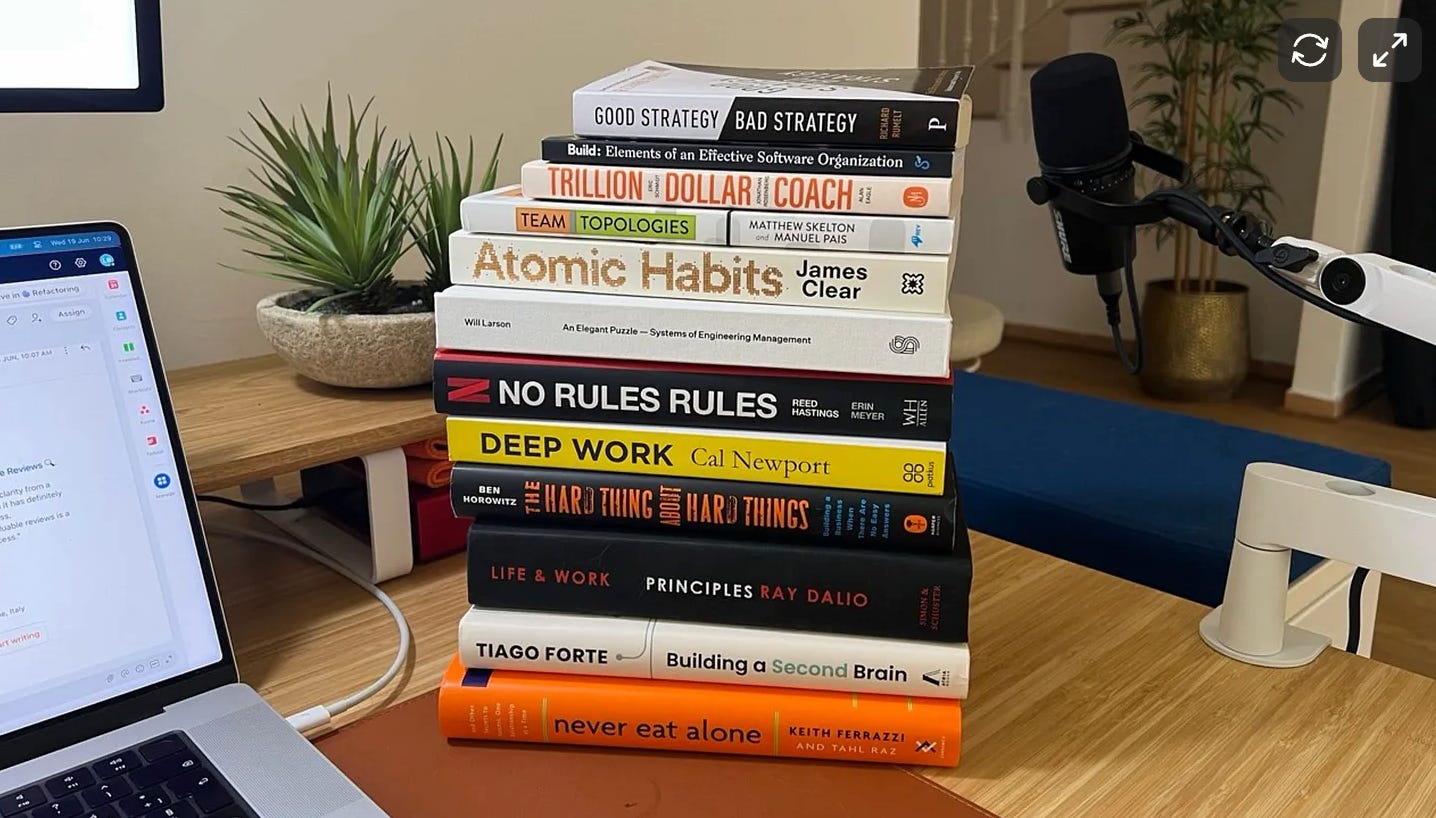
1) 📚 I read more books thanks to incentives
Last week I finished reading Frictionless, the new book by Nicole Forsgren and Abi Noda, all while I am also re-reading The Phoenix Project for the community book club.
This made me reflect on how much more I have been reading over the past two years.
I wrote about it last year, and I still stand by it today. The book club gave me two things:
Strong accountability — reading books is now literally part of my job. Book reviews also become newsletter articles, so there is no way I can give up on this.
Easy selection — for a long time I had a messy backlog of books to read, and choosing the next one felt like a chore. The club has a board where people upvote entries, so every time I just pick the top voted. Easy peasy.
This activity unexpectedly compounded with another facet of my life: my wife has always been a big reader. She keeps a book by her bed, and always reads a few pages before going to sleep. So I just started doing the same.
After a while, this led to another surprise: my wife and I started talking about the books we were respectively reading, which created common ground and led to interesting conversations.
So, reading for me has become an incredibly high-leverage activity:
🎓 Learning — it makes me learn new things.
💬 Community — it makes the Refactoring community better.
✏️ Writing — it gives me things to write about in the newsletter.
🏡 Family — it even improves my relationship with my wife.
The lesson I learned here is to always try to create flywheels and synergies so that 1+1=3.
If you have a habit you are trying to adopt and you are struggling with it, think of how you can get more value out of it. Can you do it with your friends & family? Can you make it useful for something else?
I wrote a full piece last summer about why and how I read books, which became super popular 👇

2) 🔨 Troika Consulting
A couple of months ago, Joel and Ray contributed a great article on Refactoring on how to make meetings work.
One of the techniques they explored was Troika Consulting.
In a Troika Consulting session, one person brings a challenge and shares an overview for ~1 minute. They then switch off their camera and go on mute (or turn around if they are in person) while the other people discuss their questions, assumptions and solutions in relation to the challenge.
Here is the basic sequence of steps:
Group has a “client” share his or her question (1-2 min)
“Consultants” ask the client clarifying questions (1-2 min)
Client turns around with his or her back facing the consultants.
Together, the consultants generate ideas, suggestions, coaching advice (4-5 min)
Client turns around and shares what was most valuable about the experience. (1-2 min)
Group switches to next person (if any) and repeat steps.
Joel and Ray have found that this is a great way to disrupt power dynamics — e.g. getting a senior engineer that has a habit of interrupting people to stay quiet and listen while other people come up with solutions can be transformational for people’s confidence and reveal ideas that may never have come to the surface otherwise.
This also works particularly well for neurodivergent people, as the rules of engagement and roles are really clear so therefore people that usually stay quiet are more likely to speak up.
You can find the full article below 👇
3) 🚌 The Bus Factor Problem
In August I interviewed Adam Tornhill, co-founder of CodeScene and author of the popular Your Code as a Crime Scene book.
Adam has published a ton of research as a result of analyzing code and version control history from the thousands of organizations he works with.
One of his most alarming findings is the widespread exposure to the “bus factor” risk — how many people can get hit by a bu leave an organization before code becomes unmaintainable.
The numbers are insane: in a typical codebase with ~50 developers working on millions of lines of code, the bus factor is usually as low as just 2-3 people.
Adam’s approach to mitigating this risk combines three separate analyses:
Identifying which areas would be impacted if key people left.
Determining whether those areas are hotspots (frequently changed) or stable.
Assessing the code health of at-risk areas.
When code checks all three risk boxes, Adam recommends pairing knowledge-holders with other team members for collaborative refactoring — simultaneously distributing knowledge and improving code quality.
Here is the full interview with Adam:
You can also find it on 🎧 Spotify and 📬 Substack
And that’s it for today! If you are finding this newsletter valuable, consider doing any of these:
1) 🔒 Subscribe to the full version — if you aren’t already, consider becoming a paid subscriber. 1700+ engineers and managers have joined already! Learn more about the benefits of the paid plan here.
2) 📣 Advertise with us — we are always looking for great products that we can recommend to our readers. If you are interested in reaching an audience of tech executives, decision-makers, and engineers, you may want to advertise with us 👇
If you have any comments or feedback, just respond to this email!
I wish you a great week! ☀️
Luca
Unfortunately, I don’t have time for sitting and reading but I enjoy audiobooks or podcasts. These are easy to combine with other activities.
I just finished listening to Quit by Annie Duke, who I believe you Luca, had one your podcast a few months ago.
Great storytelling and great mental models. I warmly recommend it.
Love the mix of strategy, habits, and engineering mindset.