


Hey, Luca here, welcome to a weekly edition of the💡 Monday Ideas 💡 from Refactoring! To access all our articles, library, and community, subscribe to the full version:
Resources: 🏛️ Library • 💬 Community • 🎙️ Podcast • 📣 Advertise
1) 🎙️ Reward AI skeptics
In September I interviewed Birgitta Böckeler, global lead for AI-assisted software delivery at ThoughtWorks. Her full-time work is to figure out how engineering teams can make the most out of AI!
One idea that I loved is that teams that are having the most success with AI are often approaching it with both critical thinking and ambitious experimentation.
In other words, while avoiding the extremes of (blind) faith or (complete) skepticism, they encourage and accept some version of both.
To Birgitta, the key to progressing our understanding of AI is not to sit in the right camp — of believers or skeptics — but rather to constantly produce high-quality thinking about it, in any direction.
If you have skeptics on your team, who are posing legitimate arguments, as opposed to pure prejudice, you should reward them! Someone has to play the devil’s advocate and that’s a healthy part of the exploration.
“Critical thinking, married with some ambition and some excitement about trying things, I think that’s key. You have to always reward critical thinking, whether it’s skepticism or optimism.” — Birgitta Böckeler
Here is the full interview with Birgitta:
You can also find it on 🎧 Spotify and 📬 Substack
2) 🎯 Precision vs Accuracy
In June last year I attended the LDX3 conference, where Pat Kua gave a great talk about delivery management.
One of the ideas that stuck with me is the difference between precision and accuracy in software engineering:
Accuracy — is about building the right thing (meets business needs).
Precision — is about building it consistently (on time, good quality, etc).
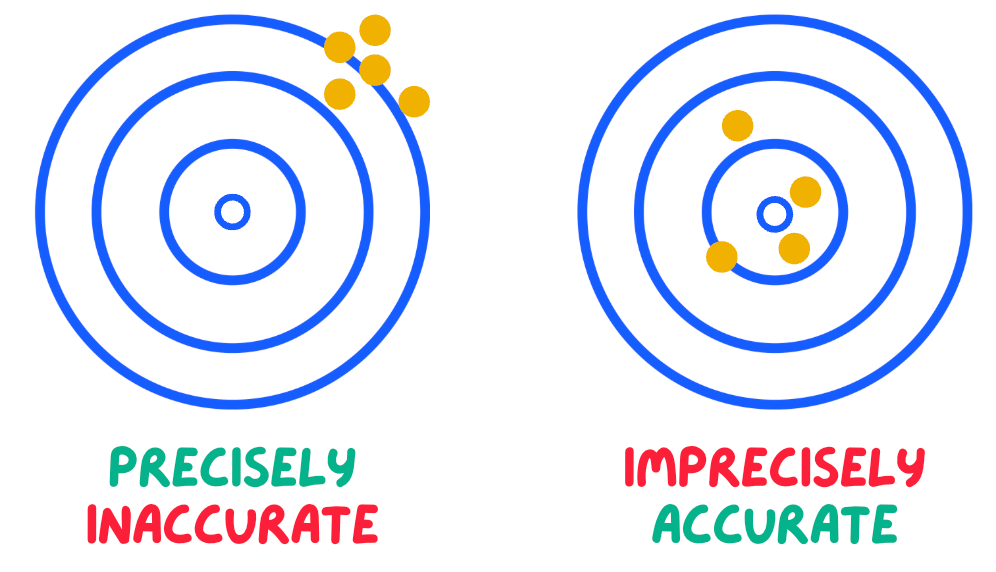
This distinction matters because it leads to different failure modes for teams. You may have teams that are:
Precisely inaccurate — extremely good at executing stuff, but it’s not stuff that brings a lot of value. E.g. they are overly focused on technical work and are somewhat detached from customers.
Imprecisely accurate — they can identify where the value is, but they are inconsistent in the delivery. E.g. they make good plans but never ship things on time, or releases often lead to big fires.
Diagnosing how your team fails is the first step towards improving.
3) 🏆 Generalists are motivated by impact (and they are right)
It’s hard to find a proper definition of what makes for a generalist.
Common traits include being proficient in many skills, being able to apply for roles across different career tracks, and regularly performing tasks that fall into different domains.
These things also exist on a spectrum. Full-stack engineers may feel like generalists, but they are arguably less so than a good friend of mine who started as a pre-school teacher, turned into customer success operator, QA engineer, and eventually engineering manager.
There is a common notion that people end up generalists because of accidental twists in their careers. It may be the case for some, but I don’t think it’s how it happens for most. The reality is we follow our inclinations more than we realize.
I have known a lot of generalists, and here is an observation: the vast majority of them are motivated by impact and the value they create, rather than building stuff for the sake of it.
This is usually the right mindset in tech.
By and large, people get promoted because of the impact they produce, not the skills they possess. And on your resume, what you helped accomplish always speaks for your skills more than anything else you can put there.
We need to avoid the trap of valuing ourselves, as professionals, by the level of sophistication of the software we craft, and instead value ourselves by the amount of value we create for the customers and the business.
Incidentally, I think that’s also what will allow us to embrace AI without restraint, instead of feeling threatened by it.
I wrote more about generalists, specialists, and AI, in this recent piece 👇

And that’s it for today! If you are finding this newsletter valuable, subscribe to the full version!
1700+ engineers and managers have joined already, and they receive our flagship weekly long-form articles about how to ship faster and work better together! Learn more about the benefits of the paid plan here.
See you next week!
Luca
Very precise and valuable advices! Thanks for sharing that.