


Hey, Luca here! Welcome to a new edition of the 💡 Monday Ideas 💡 — ideas and readings to start the week on the right foot.
I also publish an original essay every Wednesday. Here is the one from last week in case you missed it:

🚀 Build event-driven apps without the overhead
This week’s newsletter is brought to you by our friends at AWS and Confluent!
Deliver real-time customer experiences without managing streaming infra! Confluent Cloud is a fully managed Apache Kafka-based solution for event streaming, available directly from your AWS account.
See how Confluent Cloud integrates with Amazon S3, Redshift, Lambda, and Bedrock to:
Accelerate development — build real-time data pipelines connected across your AWS tools
Simplify operations — offload event streaming management to Confluent Cloud
Scale in real-time — power event-driven and generative AI apps within your AWS environment
Get technical details to start building, from step-by-step tutorials and Infrastructure-as-Code templates to a free trial 👇
🏃♂️ Make room for hard things
In Mental Marathoners, I wrote that a possible consequence of intelligence getting cheap, is that the edge moves to people who still want to stretch their own thinking.
What I don’t buy is that this hunger is just a trait — that you either have it or you don’t. I prefer to ask myself what makes me hungry in the first place.
There is a data point about runners that stuck with me. Regular runners (4+ hours a week) are unusually affluent and educated, even though running itself is cheap. This means the filter is not the cost of the hobby. To me, this looks more like Maslow: once basic needs are covered (i.e. you are affluent and educated), you free up mental space for harder challenges (i.e. running).
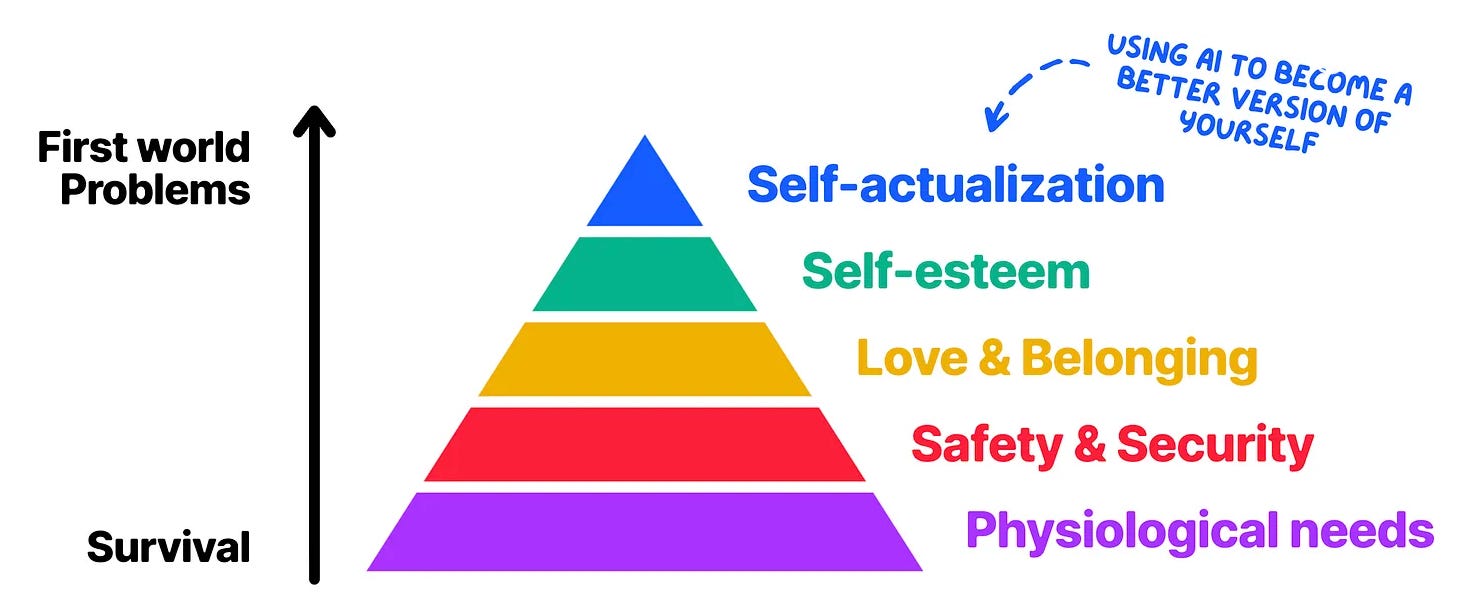
We become hungrier when the rest of our life is simple enough that a hard problem has room to be attacked.
So I think of energy like a jar. If you fill it with sand (chores, fake urgencies, a hundred open tabs), the rocks never go in. The stretch work is a rock, and in my experience, you should spend at least half your time on that.
I wrote more about mental marathoners and how to stay on the right track here 👇

📖 Use stories to deliver hard feedback
Earlier this year I talked with Michael Lopp (Rands) about the power of stories at work, and one part I keep coming back to is how he delivers hard feedback.
He told the story of a high-performing director who had only ever gotten top marks, then suddenly got a “C” after a promotion, and got furious. Instead of saying “pull it together,” Rands walked him through a personal story of going through the same experience years earlier.
This didn’t fix things overnight – it took weeks and months of continued support – but the story created space for the person to process the feedback on their own terms, instead of locking into defense.
Their job is to choose to decide whether they want to learn or not. It’s really important. If they don’t hear the story, if they don’t hear the lesson, they’re not going to do anything.
When coaching or managing people, we should assume they are capable and resourceful. In this context, stories can give just enough input to unblock someone, without spoon-feeding the answer. They get to own the conclusion, and that ownership is often what makes them actually act on it.
You can find the full conversation with Michael here 👇
📚 Weekly Readings
Finally, here are the best articles I have read this week:
🥇 If Your Team Is Happy, Are You Doing a Good Job?
9 min • by Charity Majors
Charity goes back to the ZIRP-era belief that if your team is happy, you are doing a good job, and explains how psychological safety drifted from being about learning and performance to being about never feeling bad at work.
I agree with her that frustrating people and telling them no is part of a manager’s job, because growth is uncomfortable. Great read, and part of a longer conversation with Cat Hicks that is worth catching up.
🥈 Software’s Centaur Age May Last Decades
5 min • by Sean Goedecke
Sean argues we are living in the centaur age of software, where engineers paired with AI beat both unassisted engineers and unsupervised agents, and that this phase may last decades, like it did in chess.
I don’t know if he is right about the timeline (nobody really does), but I like his advice a lot: don’t jump ship early, and spend your energy figuring out what value humans still add.
🥉 How Do AI Coding Assistants Change the Shape of Eng Work?
4 min • by Lizzie Matusov
Lizzie covers a six-month study on how AI assistants reshape engineers’ days, and the results are mixed: perceived productivity held at 84%, but the share of engineers reporting a worse developer experience nearly doubled, from 14% to 27%.
Time moved from writing code to directing and checking AI output, and focus took the hardest hit. I liked the practical advice at the end, especially batching AI review into set blocks and keeping design work and hard debugging on separate, protected time.
And that’s it for today! If you are finding this newsletter valuable, subscribe to the full version!
1700+ engineers and managers have joined already, and they receive our flagship weekly long-form articles about how to ship faster and work better together! Learn more about the benefits of the paid plan here.
I wish you a great week.
Sincerely 👋
Luca