


Hey there! Following a very successful first edition, I am publishing a new round of updates from our community, which may now turn into a monthly routine!
The Refactoring Community hosts a ton of great conversations in threads, but, most of all, every month we run two live sessions, hosted by our awesome Community Lead Melinda Seckington, and always joined by yours truly. These sessions are:
Mastermind — leaders bring a real problem and we work on it.
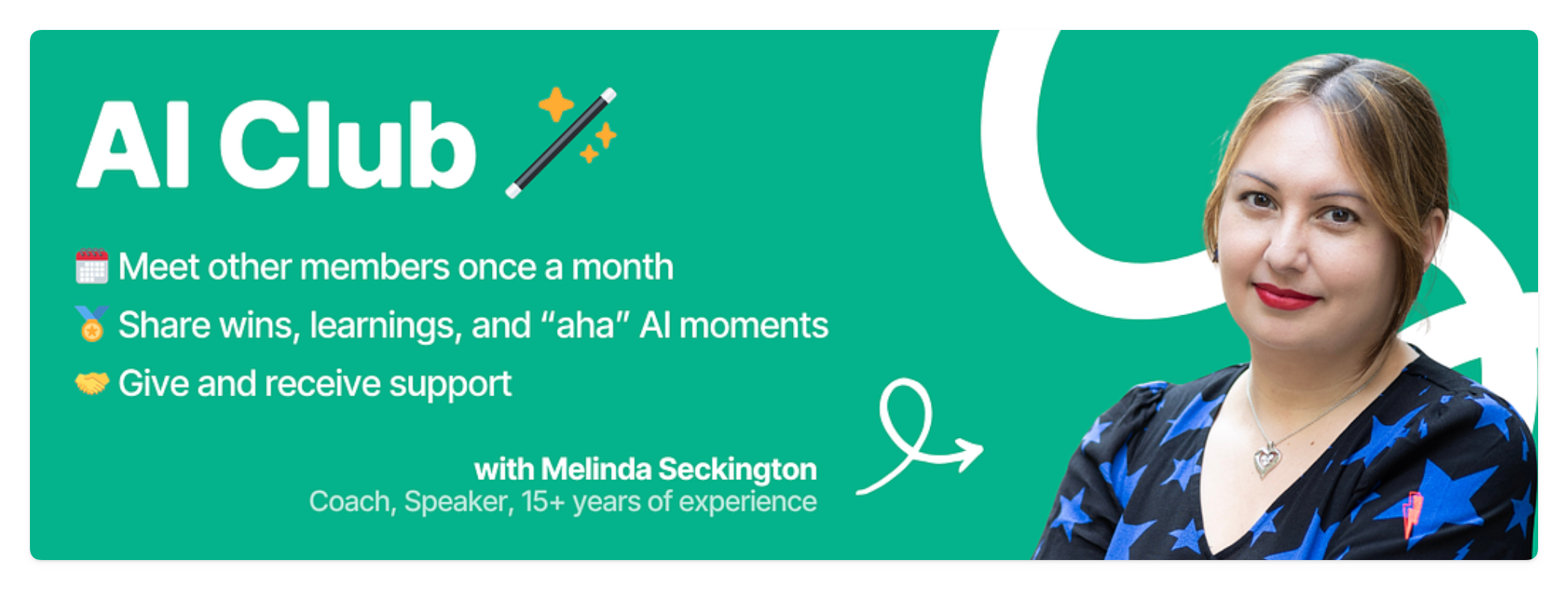
AI Club — people show what they learned about AI that month, including the parts that did not work.
This monthly recap makes sure the good stuff doesn’t stay confined to Zoom. So here is the agenda for today:
🧠 How to think about productivity now — what we discussed in the September Mastermind.
🪄 September AI Club — terminal personal OSes, picking the right models, and agents that live in the cloud.
📅 What’s next — AI Club on 2 Oct, Mastermind on 19 Oct.
💬 How this works — and how to join.
Let’s dive in!
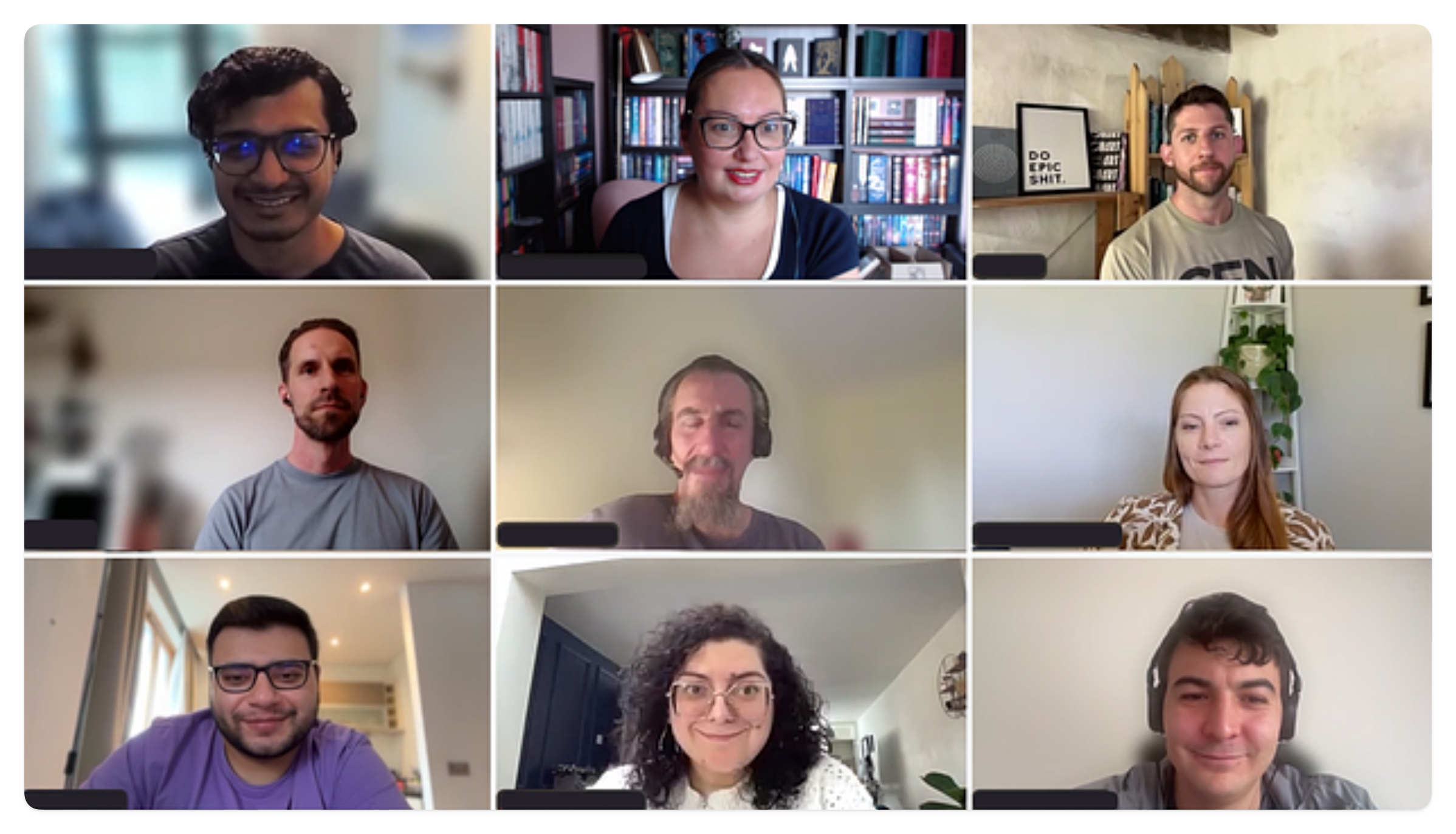
🧠 Redefining developer productivity
In this month’s Mastermind, we talked about what “good” looks like when most of the volume metrics (PRs, commits, lines of code) feel worse as proxies than they used to. Btw, have they ever been good? Probably not, but they are arguably worse now because of AI.
One of the biggest points of discussion was the tension between:
Investing in automation — making the “harness” and overall pipeline better, versus
Just shipping things — with familiar human-in-the-loop tools, especially under a short deadline.
Why is there a tension? Because with engineers increasingly acting like engineering managers of agents, there is often higher leverage in using their time to improve the system, rather than closing the ticket in front of them. But it’s still tricky to balance the two
Personally, I have found that, before digging into a task, it’s worth asking yourself whether this is a system problem, worth fixing for posterity once and for all, or just an immediate, one-off ask.
My rule of thumb is: as soon as you find yourself doing something twice, make sure you don’t do it three times.
We also talked about what to measure instead. Some people pointed at the team actually delivering on their cycle (or Sprint) goal, while others discussed the amount of features shipped, or cycle time. I think a very good leading signal is simply to directly ask engineers how they feel about work, and where they felt they were wasting time that week. Good conversations always deliver an incredible amount of signal.
There is also a ton of work that is hard to measure, aka invisible work. Things like mentoring, “insurance” maintenance, and the informal chats that keep teams moving do not show up well under hard metrics, and they get squeezed when people optimize for numbers. It’s also unclear how to score that work cleanly. No one had an answer here!
As always, you will find the full writeup in the Mastermind space (if you are in the community).
🪄 September AI Club
In this month’s AI Club, four people shared their AI wins for five minutes each, then we did the quickfire round again. Melinda wrote it up properly here. I liked a few threads in particular:
AI as an accountability partner — Kishan has built something like a personal OS that mostly runs from the terminal: daily check-ins that read journals and plans, a weekly retro on what energized / drained him, and a folder structure so ideas (notes, photos, voice memos) get filed without conscious sorting. He also shifts models by task (heavier for planning, lighter for execution) and periodically audits the core memory file itself, because instructions written in one place do not always get pulled into the right context.
The same prompt, very different outputs — Julie ran the same reflection prompt across a chat interface and a coding CLI on the newest model family. The chat version came back quite readable, while CLI version needed a lot of correction. Several people in the room had noticed the same split: this generation of models can be stronger at one-shot coding and weaker at other things, like… clear writing! So, do not assume “newer” means better across the board.
Moving the operation to the cloud — I shared my own migration of agents off the Mac Mini onto cloud machines (after a power outage and too many agents fighting over one box). Coding stays local on a kanban, while everything upstream moved. I wrote the longer version in My agents are moving to the cloud.
Working solo on something that cannot fail — Andrea is deep in a high-stakes embedded / security project, mostly alone after the rest of the team went on leave. He walked us through how he set up two tiers of docs: customer-facing ones, reviewed manually line by line, and internal brainstorming ones, mostly for AI consumption and not reviewed directly. Autonomy helps a lot, but every now and then it does funny things, like fabricating a citation that doesn’t exist, so he keeps the high-stakes parts of the ops on a tight leash.
All in all, a very practical session. Less about shiny demos, more about how people actually run their week with these tools.
📅 What’s next
Both the Mastermind and the AI Club, like all community activities, are for paid members of Refactoring. Here are the next editions 👇 RSVP on the event page to help us size the room:
AI Club • Fri 2 Oct, 14:00 CEST — five-minute shares, questions, and the one-sentence fireside round at the end.
Mastermind • Mon 19 Oct, 18:00 CEST — third Monday of the month, as usual!
Bring your questions! These sessions work because of the members, not because someone gives a talk.
💬 How this works
The Refactoring Community is a private space for paid subscribers of Refactoring: it hosts async threads, Q&A, and monthly live rooms like these.
It is home to more than 1500 engineers and managers, and it’s my favorite place on the internet!
To join it, subscribe to the full version of Refactoring!
That’s it for today! See you on the next events!
I wish you a great weekend 👋
Luca
The invisible-work squeeze shows up in financial planning too. Getting a client out of an over-insurance mess or correcting a late-start assumption is the highest-value work I do, and none of it shows up in a number, while products sold does — so the system quietly rewards the measurable and drops the rest.
Your doing-it-twice rule maps cleanly onto money. The second time a client treats an endowment plan as an investment or a home purchase as a retirement plan, that is no longer a ticket to nirvana.