


💬 Unblocked — answer questions about your codebase
Over the last few months I have been researching how teams are using AI into their workflows.
It turns out one of the best use cases is to accelerate shared understanding.
Finding the context needed to write code is often time-consuming, as people wait for responses from coworkers, dig through PRs, Slack, bug trackers, and docs.
So, today I am happy to promote Unblocked, which provides helpful and accurate answers to questions about your codebase, in seconds.
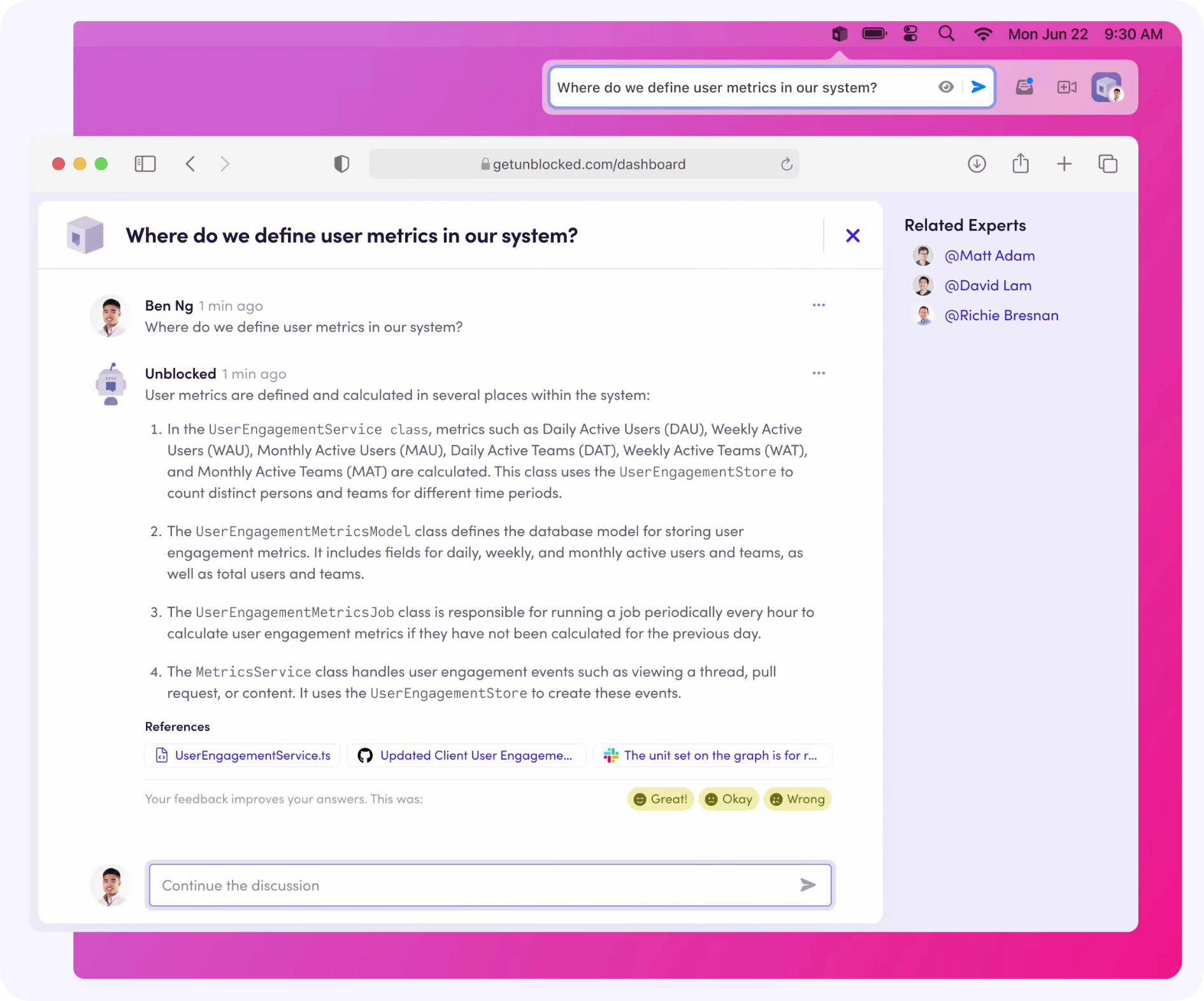
Unblocked tailors answers by complementing your source code with relevant knowledge across GitHub, Slack, Notion, JIRA and more. So you can spend less time digging for answers and more time writing code.
Back to this week’s ideas! 👇
1) 🤖 Self-hosting LLMs vs using APIs
Speaking of AI, one of the most frequent questions I hear about integrating LLMs is whether to go the OpenAI route (or the likes), using their APIs, or hosting an open-source system yourself (e.g. Llama).
APIs of course win the ease of use and time to market arguments, but what about other factors?
A few months ago I surveyed various people in the AI engineering space, and here is the consensus:
💸 Cost & Skills
Counterintuitively, self-hosting LLMs doesn’t typically save you money over using APIs. OpenAI’s pricing is extremely aggressive, and their team is world-class at optimizing the use of hardware.
For example, hosting a Llama node on a suitable AWS instance would likely cost you around $8-10 / hour, which means it would lose money on anything but high-load workflows.
And even in high-load cases, the cost upside is unclear when you factor in maintenance, which requires strong technical expertise. If you don’t have such expertise in-house, self-hosting is out of the question.
🔒Privacy & Security
Solid arguments for self-hosting are, instead, privacy and security concerns.
While you can opt out of letting OpenAI use your conversations’ data for future training, I completely understand companies who are uneasy at firehosing vast amounts of private information (possibly including their customers’) to an aggressive startup.
So, if privacy matters to you, self-hosting an LLM may be worth the hassle.
You can find the full piece about how to integrate LLMs into tech stack below 👇

2) ➕ Eisenhower Decision Matrix
The Eisenhower Decision Matrix is one of the most famous management frameworks out there. It helps you prioritize tasks based on urgency and importance.
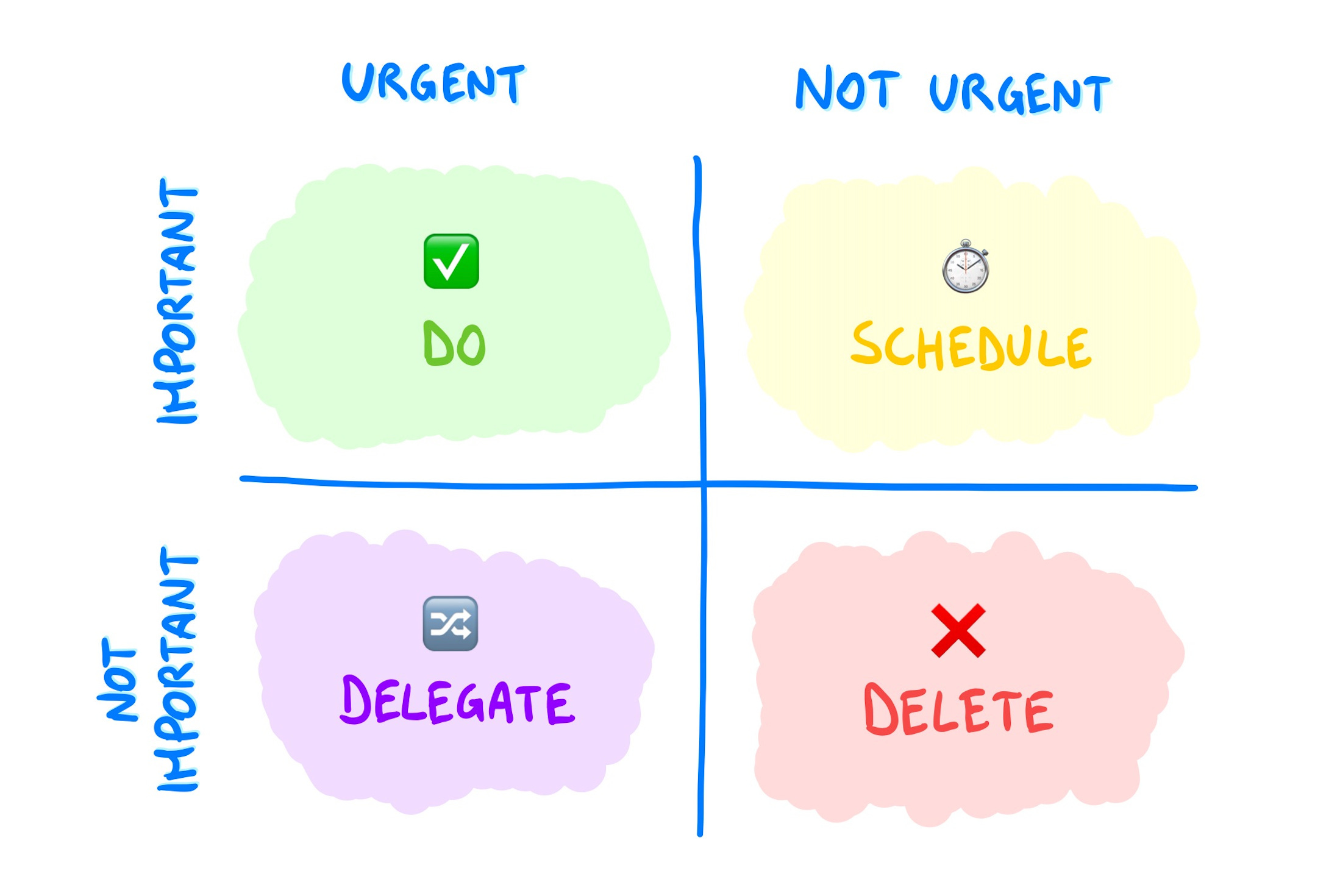
The matrix is divided into four quadrants:
✅ Urgent and Important → Do First — tasks that need immediate attention and contribute significantly to long-term goals. E.g. fixing a critical bug that's affecting a large number of users.
⏱️ Important but Not Urgent → Schedule — tasks that are important for long-term goals but do not need immediate attention. E.g. planning for a new feature.
🔀 Urgent but Not Important → Delegate — tasks that need to be done quickly but do not contribute significantly to long-term goals. They can be delegated to others. E.g. routine administrative tasks, or responding to non-critical emails.
❌ Not Urgent and Not Important → Don't Do — tasks that do not contribute to long-term goals and do not need immediate attention, so they can be eliminated. Examples could be attending non-essential meetings or browsing the internet aimlessly.
The Eisenhower matrix is a fantastic starting point to reflect on how you spend your time, but it is also pretty basic. Here are a couple of doubts:
Urgent tasks are often hard to delegate. Delegation is a long-term play; in the short-term it may require more time/effort than doing the thing yourself.
Non-important tasks are ok, but they are often trivial, so if you only delegate those, you are limiting people’s growth. It doesn’t help that non-important tasks are also often small, which makes the ROI of delegation dubious.
I wrote a full piece about delegation where I try to give the matrix more nuance and make it more useful for daily work 👇
3) 🪑 Scope projects like IKEA
Over time I have realized that when somebody — a product person, a CEO, whoever — comes up with a product idea, they probably have a rough timeframe already in the back of their mind.
They don’t think their idea is worth at any cost — they think it would be e.g. a nice experiment if delivered in three months. Three months isn’t just a time here, it is a cost: it is three months multiplied by the salaries of the people on the team.
Projects only make sense if they fit a budget — which the Basecamp guys call appetite. The appetite for a project largely exists upfront, and is inseparable from the idea itself.
I have found that most issues with estimates, negotiations, and fighting between stakeholders, arise from such an appetite not being visible to the team, and not being treated for what it is: a constraint.
Famously, IKEA designs furniture by creating the price tag upfront. They don’t design a chair first and ask manufacture what it would cost later. Instead, they know e.g. that there aren’t many good office chairs for <€200, and that there are people in the market for those. So they ask: what can we ship at that price point? What can we include? What can we give up?
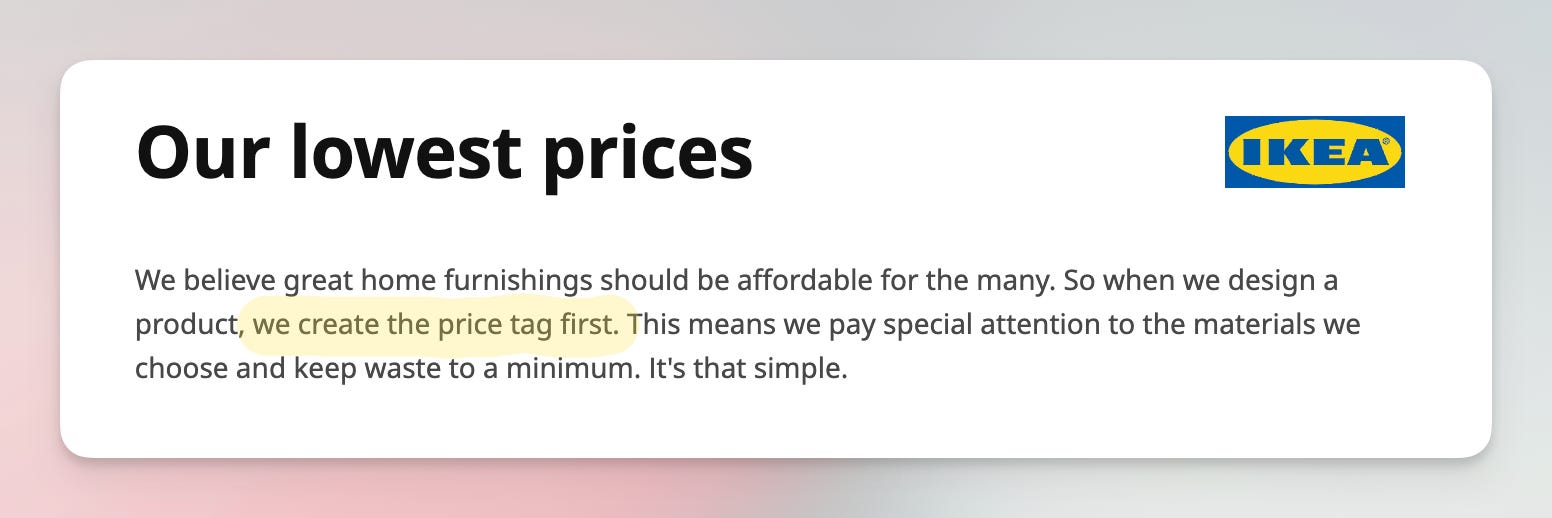
You can treat software projects like IKEA chairs. How can we solve this problem in one month? How can we design a solution that works within this tight scope?
Now, for small-ish initiatives that take up to a few weeks, I have found that getting this conversation right is 80% of the work. You align people’s expectations, make constraints visible, figure out a reasonable scope, and go for it.
For large projects, instead, things are trickier.
Appetite might be unclear. Sure, if we are right about the need/demand for this, a year of development might be well spent, but 1) we don’t know if we are right, and 2) is a full year really needed?
I wrote a full guide about planning and executing projects earlier this year 👇
And that’s it for today! If you are finding this newsletter valuable, consider doing any of these:
1) ✉️ Subscribe to the newsletter — if you aren’t already, consider becoming a paid subscriber. 1500+ engineers and managers have joined already! Learn more about the benefits of the paid plan here.
2) 🍻 Read with your friends — Refactoring lives thanks to word of mouth. Share the article with your with someone who would like it, and get a free membership through the new referral program.
I wish you a great week! ☀️
Luca
I also have a doubts about Eisenhower Decision Matrix.
When do we have to use this matrix? every day, every week, when we are lost?