


Hey, Luca here! Welcome to a new edition of the 💡 Monday Ideas 💡 — ideas and readings to start the week on the right foot.
I also publish an original essay every Wednesday. Here is the one from last week in case you missed it:
🔨 Autonomous Software Dev for the Enterprise
This week’s newsletter is brought to you by our friends at Blitzy!
Blitzy is built for large, complex software projects that other coding agents cannot handle: large-scale refactors, scaled vulnerability remediation, and undocumented legacy systems.
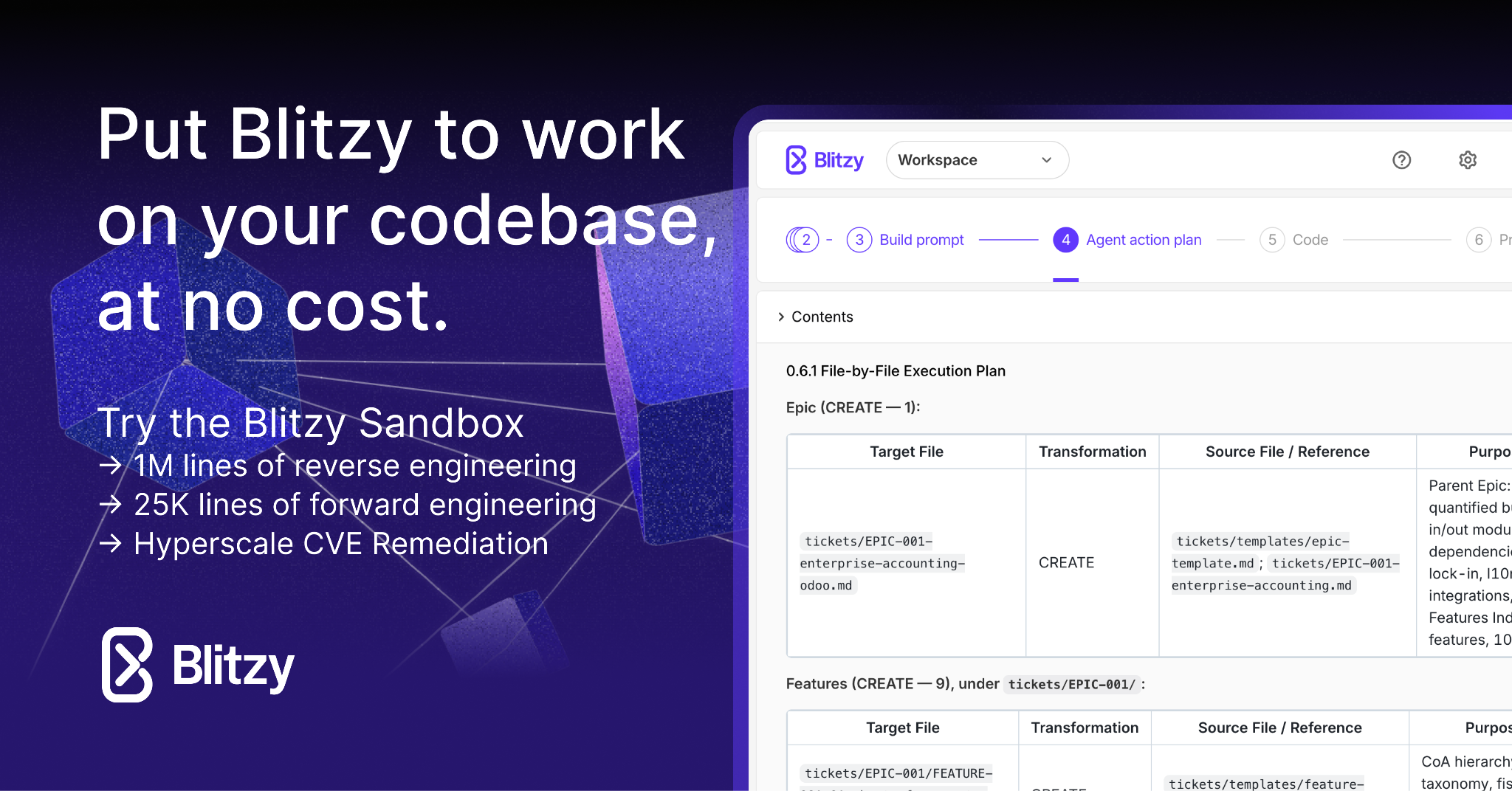
Blitzy’s Sandbox lets engineers evaluate Bitzy on their own software estate, at their own pace. Eligible organizations can connect real applications, reverse-engineer up to 1 million lines of code, generate up to 25,000 lines of E2E tested code, and surface prioritized security vulnerabilities across their software estate.
🌱 Grow juniors with guardrails and judgment
One of the most important qualities of junior engineers is that they can turn into senior engineers. But that does not happen automatically.
There is a dream scenario where juniors grow, become senior, and help rotate headcount when seniors leave. But there is also a nightmarish one where juniors are thrown in the trenches, abuse AI in ways they do not understand, nobody checks on them, and the product eventually goes to shit.
When the growth cycle breaks, it is usually because juniors do not have a tight enough feedback loop: 1) one that keeps the work high quality, and 2) one that helps them learn from doing it.
To me, the loop looks two-fold:
Invest in an amazing harness — create guardrails, rules, and gates, and encode everything that can ensure quality automatically. This helps everyone: seniors, AI, and juniors who can learn from the same rules.
Pair juniors with seniors — let young folks experiment and move fast, but keep seniors close enough to provide judgment and supply systems thinking.
There is no way around the fact that AI makes the junior path harder in some ways, because more judgment is needed earlier. But that is also why freezing junior hiring is such a fragile bet: you optimize for today’s output, at the expense of starving the pipeline that should produce tomorrow’s seniors.
I wrote more about this in the full piece 👇

📱 Most AI products are still “m.google.com”
When I spoke with Charlie Guo, developer experience engineer at OpenAI, we walked through three eras of AI-assisted development.
First came models that could autocomplete snippets, which became tools like GitHub Copilot. Then came AI-native IDEs like Cursor, where the model sat inside the editor. Now we are entering a third phase: standalone apps that orchestrate agents, and move beyond the text editor entirely.
Charlie believes most products are still stuck in the middle of that transition:
The m.google.com of AI was (or is): take this product and cram a chat box on the sidebar, and then chat with it on the side while you’re doing stuff in the app.
That’s similar to when the iPhone arrived: companies took desktop websites and mostly squeezed them into a vertical layout. It took nearly a decade to invent native mobile products: Uber, DoorDash, things that could not really exist on a desktop.
We are in that same messy middle with AI. A chat sidebar is not necessarily bad, but it’s just an easy retrofit. Native agent experiences are still being invented.
You can find the full conversation with Charlie here 👇
📚 Weekly Readings
Finally, here are the best articles I have read this week:
🥇 What psychological costs does AI adoption create for engineers?
4 min • by Lizzie Matusov
Lizzie covers a case study from a large Danish software company, one year into an org-wide AI rollout. Regular engineers feel “accountability anxiety” and “craft identity disruption” as tools take over work, while architects (more augmented than replaced) barely show the same costs. Interesting research, worth looking into.
🥈 De-Brainrot Vacations
4 min • by Daniel V.
This piece by Daniel really resonated with me. He noticed that after years of engineering, plus AI and phone dopamine, his thinking got slower and lazier. So he used a countryside vacation to reset his brain by reading hard books and doing math and physics as a hobby. This is peak mental marathoners!
🥉 The Internet Is Kind of a Predatory Cesspit Now
8 min • by Stephen Diehl
Stephen argues that, over the years, “predation” moved from the periphery of the internet to its very core, and that a lot of ordinary people have been (often unwillingly) conscripted into it. I have less of a bleak view about this, but I see where Stephen is coming from and I don’t necessarily disagree. Worth reading!
And that’s it for today! If you are finding this newsletter valuable, subscribe to the full version!
1700+ engineers and managers have joined already, and they receive our flagship weekly long-form articles about how to ship faster and work better together! Learn more about the benefits of the paid plan here.
See you next week!
Luca