


Hey, Luca here! Welcome to a new edition of the 💡 Monday Ideas 💡 — ideas and readings to start the week on the right foot.
🎟️ Join our webinar on how to become an agentic engineering org!
On July 22nd I will host an exclusive webinar together with the team at Augment Code!
Most teams adopt coding agents and see a 20% lift at most, and then plateau. The most common reason is that the bottleneck moves, and you should lift your whole dev process, not just coding.
In this session, the Augment Code team shares how they transformed their own engineering org by redesigning one workflow at a time, and demos two of them live on a real codebase: agentic code review and automated incident management, where agents now resolve the majority of incidents end-to-end.
You’ll leave with a playbook for finding your org’s current bottleneck and a workflow you can replicate with your team this week 👇
1) 🧹 AI makes code hygiene enforceable
I have written many times about this recently, but I’ll keep hammering on this point because it is so important, and I believe many people haven’t fully grasped it yet.
Good code hygiene is, at once, 1) something everybody agrees with in theory, and 2) quietly and often sacrifices in practice, because it’s hard to maintain.
Things like good test coverage, small files, high cohesion + low coupling, low cyclomatic complexity, have all historically needed people who care enough to push for it, review for it, and absorb the cost of fixing it.
For the first time, AI allows to turn hygiene into a system that can be enforced at almost no additional cost. You can give agents rules about how to write tests, keep files small, or refactor before adding new behavior.
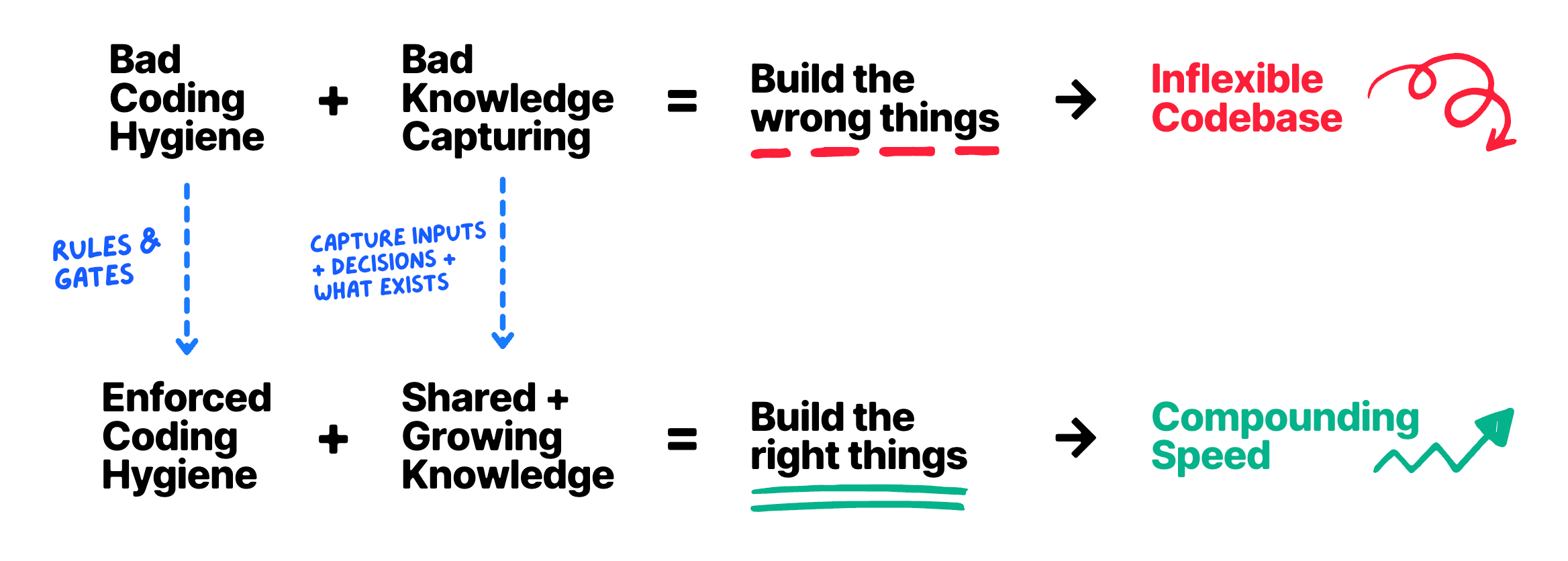
Many of such rules can also be enforced by gates: coverage checks, code health thresholds, linters, static analysis, and more. Guidance tells the agent what the floor looks like, and gates make such floor non-negotiable. And you can design these checks to run early, so the feedback arrives while the work is still cheap to fix.
The #1 concern of engineers about AI coding is still code quality, but you can actually use AI to increase the code quality of your team. I wrote more about this in the full piece on the compounding software factory 👇

2) 🪞 Find a broader identity for yourself
A lot of the anxiety around AI is really about who you are (and who you are going to become) as a professional, rather than about tools.
Based on your sense of identity, AI can feel either like an opportunity, or a threat.
If you define yourself narrowly — e.g. “I am a backend engineer who is great at algorithms”, or “I love the thrill of solving puzzles with code” — then AI might feel like it is walking into your house and stealing furniture.
Earlier this year I talked about this with my friend Thiago Ghisi, who had a long engineering leadership career, and then used his sabbatical to step back and look for broader patterns in his life and work.
He is now studying clinical psychology— and sure, if you frame him only as a Director of Engineering, this might look like a strange detour. But if you frame him as someone who helps high-achieving people grow, you can suddenly connect more dots.
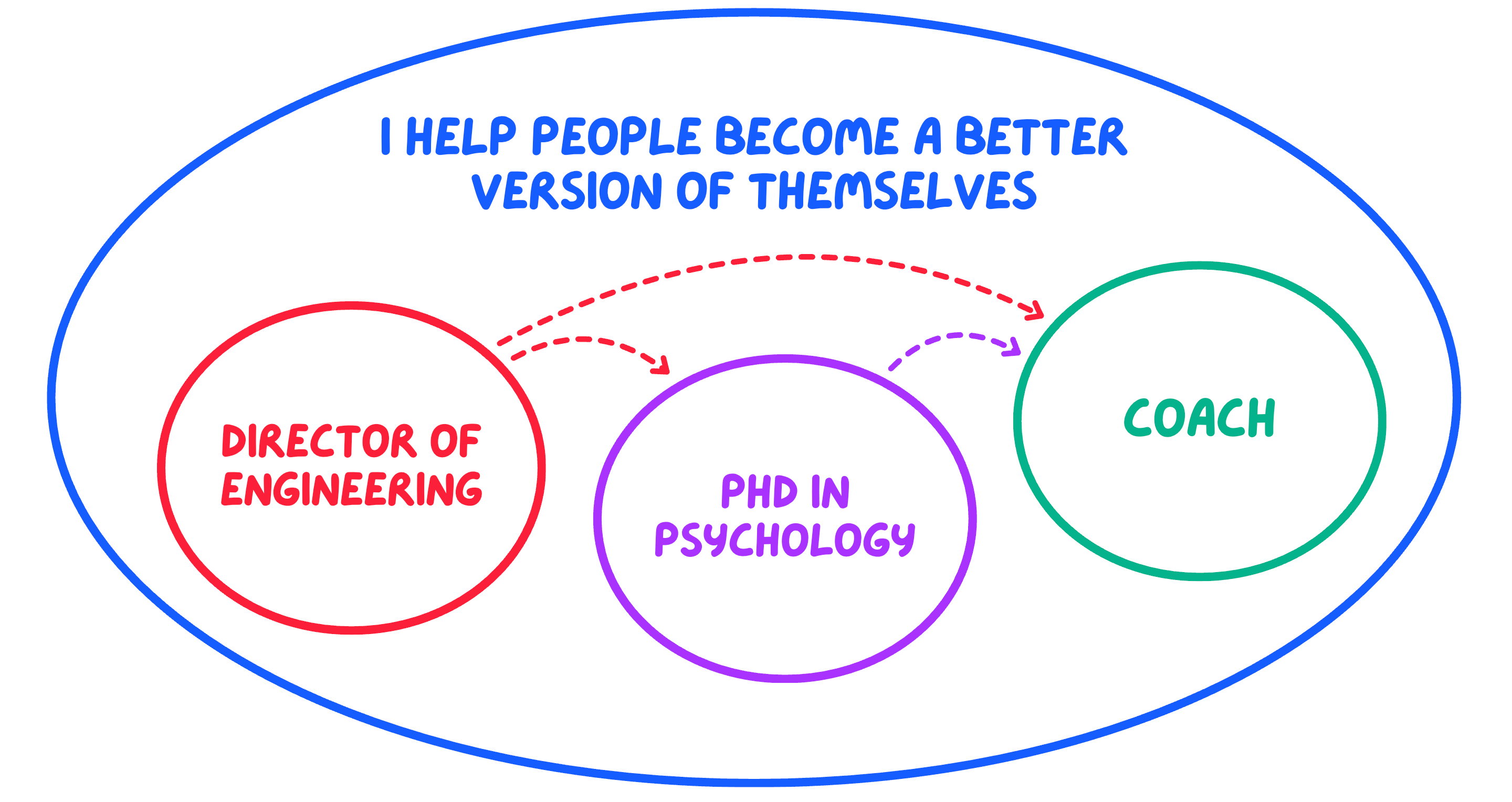
I think this is a useful exercise for engineers too. Instead of thinking in terms of skills, ask yourself:
Why do I do what I do?
What is a broader version of my role?
What kinds of problems do I actually care about solving?
A broader identity makes you more adaptable, and opens up more opportunities. You can find the full piece below 👇
3) 📚 Weekly Readings
Finally, here are the best articles I have read this week:
🥇 The Cost YAGNI Was Never About
4 min • by Kent Beck
I love how Kent reframes YAGNI for the AI era. The cost has never been writing the actual code, but rather spending optionality too early, and pulling investment forward before the feature can pay you back. Great article everyone should read.
🥈 The Wrong Abstraction
4 min • by Sandi Metz
This is a great segue to the Kent’s article above. Duplication is usually cheaper than the wrong abstraction, because the wrong abstraction eventually collects all kinds of bad stuff — parameters, conditionals, and sunk-cost arguments. Sometimes the fastest way forward is going back, but this is usually very hard to do.
🥉 AI and Liability
4 min • by Bruce Schneier
Including this great piece by Bruce even if it’s not properly about software engineering, because it’s so relevant today. Companies should be liable for what their AI agents say and do, just like they are for employees or published content. If your product presents an answer with your logo on it, you should own it, and not use “the model said so” as an escape hatch.
And that’s it for today! If you are finding this newsletter valuable, subscribe to the full version!
1700+ engineers and managers have joined already, and they receive our flagship weekly long-form articles about how to ship faster and work better together! Learn more about the benefits of the paid plan here.
See you next week!
Luca