This newsletter is brought to you by our friends at DX!
DX has spent the last year studying what this measurement gap means in practice.
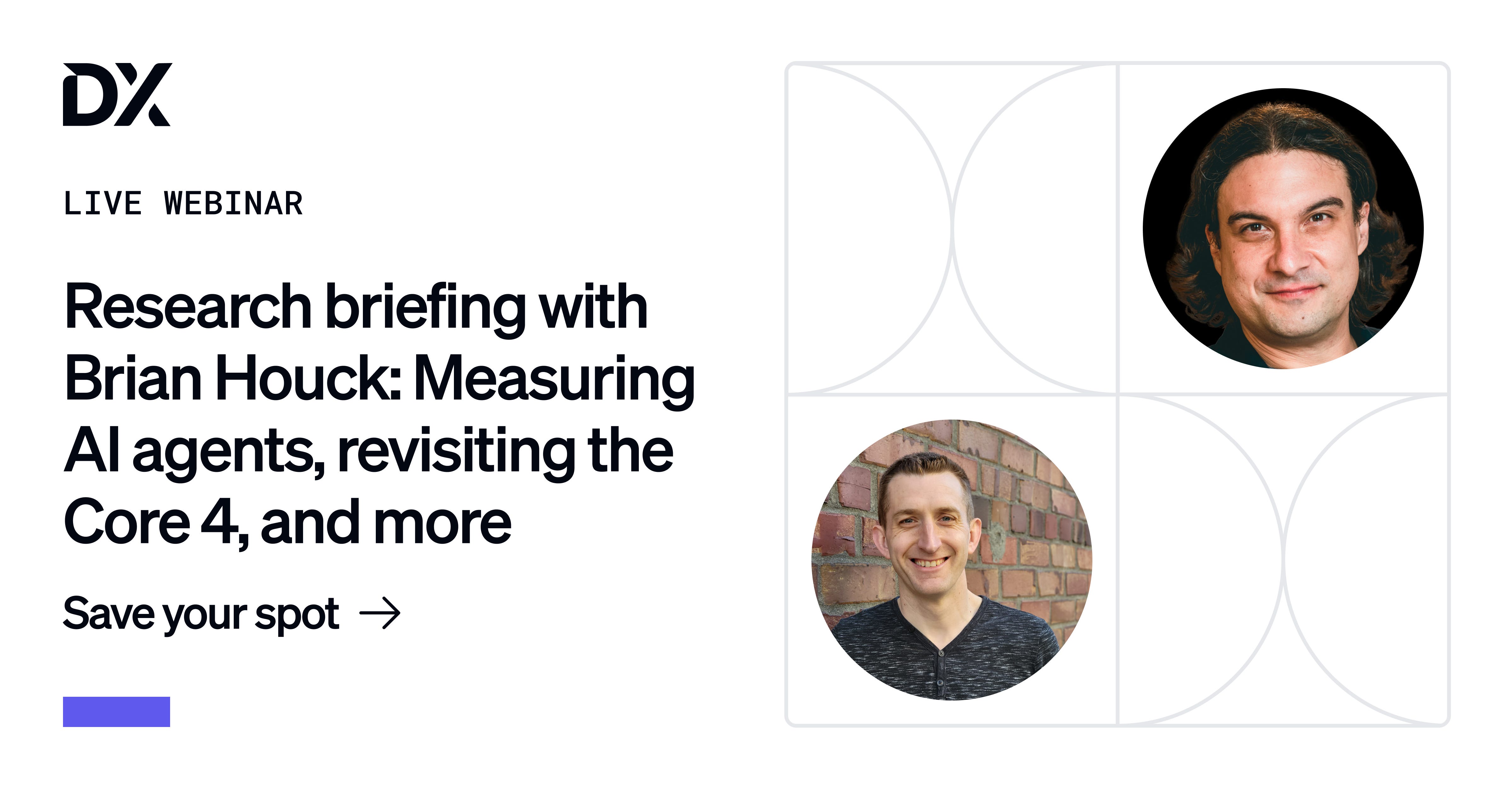
On June 18th at 09:30 PT, Distinguished Scientist Brian Houck and Deputy CTO Justin Reock are presenting their research on agent experience, AI readiness, and what the data says about productivity in an agentic world.
A lot of AI workflow demos make it look like the agent should own the whole process: understand the goal, decide the steps, call tools, and maybe even schedule the next run.
This is quick (and exciting!) when you are prototyping, but it is arguably a bad default for recurring work.
The boring parts of a workflow—routing, retries, scheduling, validation, etc.—need to be dependable, rather than “smart”. For things that I run regularly (e.g. all Tolaria procedures) I want to know which steps failed, what inputs they saw, whether they retried, and what state was left behind.
So the architecture I like more and more is hybrid:
Orchestration owns the skeleton — when the workflow runs, what each step consumes and produces, how failures recover, and what humans can inspect.
AI owns the messy parts — classification, summarization, judgment calls, and human-readable updates.
This does not make AI less important. If anything, it makes it more useful, because it stops wasting tokens and attention on plumbing that traditional software is a better fit for.
So, agents are a fantastic way to discover/prototype a workflow. But once the shape is known, the right move is to extract the stable pieces into code and keep AI where ambiguity actually exists.
I wrote more about this in the full piece on orchestrating AI workflows 👇
Last week Ladybird announced they are stopping accepting public PRs — the latest of a series of projects doing the same.
This made me think of my chat with Chris Lattner, where we discussed the impact of AI on open source.
Chris has spent a huge part of his career building massively successful open source projects — LLVM, Swift, MLIR, Mojo — and is concerned about the current state of things. As it’s now obvious, AI makes it much cheaper to produce contributions, but it does not make reviewing them equally cheaper.
“With AI tools, what’s happening is that a lot of maintainers are getting overrun. The contributor doesn’t have to do nearly as much work, but the reviewer has to do the same — at a bigger scale. I think it’s going to lead to new contributors not getting the attention they deserve.”
This is important because, in open source, patches have always been about mentoring and trust-building. Maintainers invest time in people, people learn the project, and some of them eventually become future stewards.
Chris also connects this to intellectual property. If agents can rewrite proprietary tools, translate GPL code into MIT-looking projects, then copyright and licensing become much harder to reason about. As it’s often the case, legal systems lag behind reality.
But the optimistic version is that this also pushes companies toward openness. If secrecy and proprietary headers become weaker moats, the better strategy is to build strong communities, move fast, and compete on innovation rather than control.
We should decide whether to see the glass half empty or half full!
You can find the full interview with Chris here 👇
3) 📚 Weekly Readings
Finally, here are the best articles I have read this week:
Short, sharp, and very true: AI makes writing software cheaper, but it does not make knowing what “correct” means any cheaper. The best engineers were always the ones building a model of the domain in their head, as opposed to simply translating tickets into code. That part is still a moat!
I liked this because it frames AI coding less as “the machine writes code” and more as “the machine forces you to make senior thinking explicit.” If you care mostly about typing code, agents are annoying. If you care about judgment, tradeoffs, and intent, they free up the interesting part.
Ladybird is stopping public pull requests and moving to maintainer-only code changes. The rationale is that, in the AI era, patch size is no longer a good proxy for effort or good faith. Open source maintainers are going to rethink trust, review, and responsibility a lot more than we admit. Thinking about this myself with Tolaria.
And that’s it for today! If you are finding this newsletter valuable, subscribe to the full version!
1700+ engineers and managers have joined already, and they receive our flagship weekly long-form articles about how to ship faster and work better together! Learn more about the benefits of the paid plan here.
The discover-then-freeze sequence is the part most agent demos skip. Letting the model own routing, retries, and scheduling looks clean in a prototype because you can't yet see the failure modes, but recurring work needs steps that fail the same way every time, not creatively. The useful test is whether a step's output should ever surprise you. If not, it belongs in code, and the model's job is the ambiguous middle. Teams that draw that line early spend their tokens on judgment instead of re-deciding solved problems on every run.




The discover-then-freeze sequence is the part most agent demos skip. Letting the model own routing, retries, and scheduling looks clean in a prototype because you can't yet see the failure modes, but recurring work needs steps that fail the same way every time, not creatively. The useful test is whether a step's output should ever surprise you. If not, it belongs in code, and the model's job is the ambiguous middle. Teams that draw that line early spend their tokens on judgment instead of re-deciding solved problems on every run.